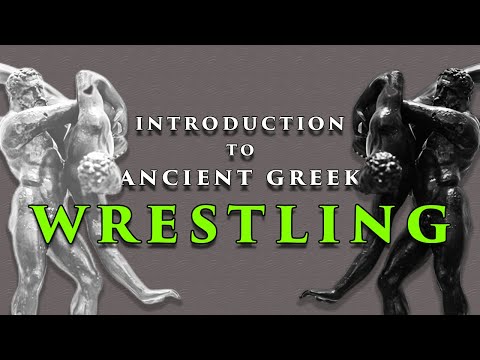
The rules, unchanged across 2,700 years of tradition
Athens National Archaeological Museum · NAMA 3476
708 BCEOlympic Debut
2,700+Years of Competition
2026IPA Founded
RenewedLiving Tradition
Our Mission
What We Do
The International Palē Association (IPA) is a non-profit association aiming to revive, advance, and promote the ancient Hellenic sport of Palē: a culturally significant form of wrestling. A prominent sport in the ancient Olympics, Palē is a safe, entertaining, and educational athletic discipline with thousands of years of tradition. Through this competitive combat sport, the IPA will serve athletes of all ages and communities across Illinois and beyond.
Based on the ethical, philosophical, and historical ideals of the ancient Hellenic Olympic tradition, the IPA is dedicated to the cultivation of a sporting environment that is accessible and grounded in integrity, mutual respect, discipline, and athletic excellence. The IPA is committed to fostering athlete welfare, cultural education, and public understanding of ancient Hellenic athletic traditions. The IPA is equally committed to the academic research necessary to accurately renew all aspects of the sport's culture, from its technical practice through the study of surviving ancient texts and archaeological evidence, to the preservation and use of Hellenic terminology associated with the sport.
Through the struggle of contest, Palē builds more than physicality; it builds character and cultural understanding while teaching critical thinking, research and experimentation through mutual cooperation. The IPA stands with athletes and scholars alike, uniting cultural organizations, athletic competition and research initiatives in order to revive, preserve and transmit the legacy of ancient Hellenic athletic culture for present and future generations.
The International Palē Association's goal is the widescale recognition of Palē as a renewed living tradition that bridges ancient Hellenic culture with the modern era: a sport practiced globally by athletes of all ages and nationalities. The association aims not solely for the revival of this ancient practice, but also for its modernization and dissemination as a sport as relevant today as it was in the ancient Hellenic Games.
The goal of the IPA is to become the international governing body for the sport of Palē, and to create the conditions necessary for the creation of local clubs and national bodies that will practice the safe — but also historically accurate — ruleset of the sport, laid forth by the association, with athletic integrity, cultural respect, and community service.
The IPA envisions Palē as a vessel through which the values of the ancient PanHellenic Games — arete (excellence), philotimia (love of honor), and kalokagathia (the unity of nobleness and goodness) — may once again find expression in modern athletic competition. Through the continued development of safe, ethical, educational, and internationally organized amateur competition, the Association aspires to achieve recognition for Palē within the broader international sporting community, including eventual participation in the Olympic Games.
The International Palē Association Renews Palē Competition
Origins & History
The Ancient Hellenic Sport
Palē was the Greek sport of wrestling, an integral part of society occupying a position of supreme cultural prestige: from Olympic champions to the greatest of philosophers. Even as far back as the epic poems of Homer, Palē was described as a highly technical sport of sophisticated technique, championed by heroes like Odysseus, Heracles, and Theseus. Its founding is rooted in mythology, said to have been created by Hermes, the god of cunning, trickery, and craftiness. Palē is a sport governed by precise rules, and was contested at all four of the great Panhellenic Games of antiquity: the Pythian, the Isthmian, the Nemean, and the Olympic Games.
Like the heroes that practiced Palē, it was not only about physical strength, but also intellectual discipline and the expression of philotimia and aretē — the pursuit of excellence in all matters.
◆
In the Press
Palē in Scholarship & Media
TheCollector
Palē — Greek Wrestling
By Athanasios Bonas
A feature on Palē tracing the ancient Greek wrestling tradition from its mythological roots and historical rules through its enduring cultural legacy and modern revival.
Palē's history and its place among the ancient Panhellenic sports are examined in this peer-reviewed article by IPA President Athanasios Bonas, published in one of the leading academic journals dedicated to the history of sport.
Also referenced in a second piece, "On the Unsubstantiated Notions of Doping and Chronic Cheating in Ancient Hellenic Olympics," published in the IJHS. Read it here →
◆
How It Is Practiced
The Fundamentals of Palē
Victory in Palē is achieved by forcing the opponent onto their back or their belly, either via throws and trips, or through skillful groundwork. Each time the scoring condition was met, the match restarted at a neutral position. An athlete would have to achieve three falls in order to be declared the victor.
Athletes competed in what was called a skamma: a patch of pickaxe-worked, leveled, de-stoned, softened, and raked earth that was 15 meters (about 50 feet) per side. Today, matches are carried out on tatami-style mats of at least five centimeters (about two inches) in thickness. Instead of the traditional perizoma, the athletes wear rashguards and pants.
The IPA's mission is to showcase Palē's incredibly fun and entertaining, yet still historically authentic, ruleset to a wide-scale audience and ultimately facilitate its reintroduction to its rightful place in the Olympic Games.
◆
See It In Motion
Palē in Film & Videos
YouTube
The Art of Palē: A Sport That Shaped Combat for Millennia
An introduction to Palē's ancient origins and techniques, illustrated with historical text, vase depictions, and modern wrestling footage.
Real Palē Footage Coming Soon
We're currently filming live Palē competition and technique demonstrations under the IPA ruleset. Check back for updates.
◆
Historical Timeline
Palē Through the Ages
Before 708 BCE
Palē practiced widely across Greek city-states, referenced in Homer's Iliad in the funeral games of Patroclus. Wrestling already a central discipline of gymnasium training.
708 BCE
Palē officially introduced as an Olympic event at the 18th Olympiad. The sport gains formal codified rules and international prestige.
5th–4th Century BCE
The golden age of Palē. The sport is celebrated by Pindar in his victory odes, and by Plato and Aristotle as a model of physical and intellectual development.
1870
Palē is instituted in the Zappas Olympics with its original ruleset, being once again practiced in the Olympics after nearly 1,500 years.
1970
Palē continues to be practiced in limited capacity in Greece, despite occupation forces. The Sporting Games begin to fade due to rural depopulation and urbanization.
2026
The International Palē Association is founded, with the mission to promote Palē as a living competitive sport and cultural tradition.
The following principles are drawn from the ancient practice of Palē and form the philosophical and structural foundation of the IPA ruleset.
01
Standing and Groundwork
Palē is contested both upright and on the ground. The objective is to force the opponent into a pin — three successful falls are required to win a bout.
02
Victory by Throw
A throw is scored when the opponent falls or is forced into a position where their back or belly touch the ground as a result of a controlled technique.
03
No Striking
Palē is a wrestling discipline. Striking, kicking, and eye gouging are prohibited. Only wrestling techniques — grips, throws, trips, and holds — are permitted.
04
Ethical Conduct
All competitors are expected to conduct themselves in accordance with the Hellenic values of the IPA — respect for the opponent, integrity in competition, and submission to the judgment of officials.
05
Safety First
The IPA's ruleset is designed to be both historically accurate and safe. Techniques that create unreasonable risk of injury are prohibited, and officials may stop the contest at any time.
06
Official Jurisdiction
All IPA-sanctioned competitions are governed by certified IPA officials. Their decisions are final. Disputes are resolved through the IPA's established conduct and appeals procedures.
Whether you are an athlete, a scholar, a coach, or a cultural organization — there is a place for you in the International Palē Association.
Stay in the Loop
Join Our Mailing List
Receive occasional updates on competitions, research publications, events, and developments in the revival of Palē.
We will only use your email to send IPA news and updates.
You may unsubscribe at any time by contacting us.
I
Individual Athlete
Open to wrestlers and martial artists of all ages and backgrounds who wish to train, compete, and represent the values of Palē in their practice.
II
Club or Academy
Training clubs, dojos, and athletic academies that wish to offer IPA-sanctioned Palē programs and compete under official IPA rules.
III
National Federation
National-level governing bodies seeking to represent Palē within their country under the IPA framework and work toward Olympic recognition.
IV
Scholar or Researcher
Academics, historians, archaeologists, and cultural researchers who wish to contribute to the IPA's mission of authentic historical reconstruction.
V
Cultural Organization
Hellenic cultural societies, community organizations, and institutions that wish to partner with the IPA in promoting ancient Greek heritage.
VI
Coach or Official
Coaches, referees, and officials who wish to be certified by the IPA and contribute to the development and governance of the sport.
Support the Mission
Donate to the IPA
Your contribution helps revive an ancient tradition, fund academic research, develop youth programs, and bring Palē to athletes around the world.
Under Construction
Donation functionality is not yet available.
Thank you for your patience and support.
Custom Amount
Give What You Can
Every contribution, regardless of size, advances the revival of Palē.
The International Palē Association has applied for federal tax-exempt status under Section 501(c)(3) of the Internal Revenue Code. Our application is currently pending. If approved, donations will be tax-deductible to the extent permitted by law.
$
Where Your Money Goes
How Donations Are Used
Athletic Development — Funding competitions, athlete development programs, and youth outreach initiatives that bring Palē to new communities.
Academic Research — Supporting the scholarly work necessary to accurately reconstruct the technical and cultural dimensions of ancient Palē from archaeological and literary evidence.
Cultural Programming — Organizing exhibitions, lectures, and public events that share the history and philosophy of ancient Hellenic athletic culture with wider audiences.
Governance & Infrastructure — Building the organizational foundations — certification programs, ruleset development, and international federation outreach — necessary for Palē to grow as a recognized global sport.
Get In Touch
Contact the IPA
We welcome inquiries from athletes, scholars, cultural organizations, media, and anyone interested in the revival of Palē.
Contact Information
Reach Us
General Inquiries
info@ipawrestling.org
Send a Message
Write to Us
The People Behind the Mission
Who We Are
The IPA is built by a small founding team of athletes, scholars, and cultural organizers united by a shared conviction: that Palē deserves a place in the modern world.
Team Bios & Photos — Coming Soon
We're finalizing portraits and biographies for our founding team. This section will be updated shortly — thank you for your patience.